Choosing the right O-ring involves more than just size and material. One of the most critical but often overlooked factors is the material hardness. This indicates how soft or firm a rubber compound is, influencing how well the O-ring seals, resists pressure, and performs in real-world conditions.
For most O-ring applications, Shore A hardness (abbreviated ShA or HA) is the primary scale used. However, understanding how different Shore scales work provides important context for making the best choice.
What Is Shore Hardness?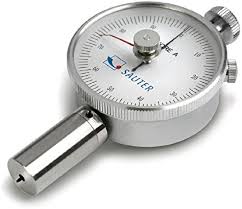
Shore hardness is a measure of how resistant a material is to indentation, indicating how soft or hard it is on a standardised scale. It is determined using a device called a durometer, which applies a standardised force to a material and measures its resistance to indentation. The result is a numerical value that helps compare the hardness of different materials.
Overview of Shore Hardness Scales
There are several Shore scales, but the most commonly used for polymers and elastomers are:
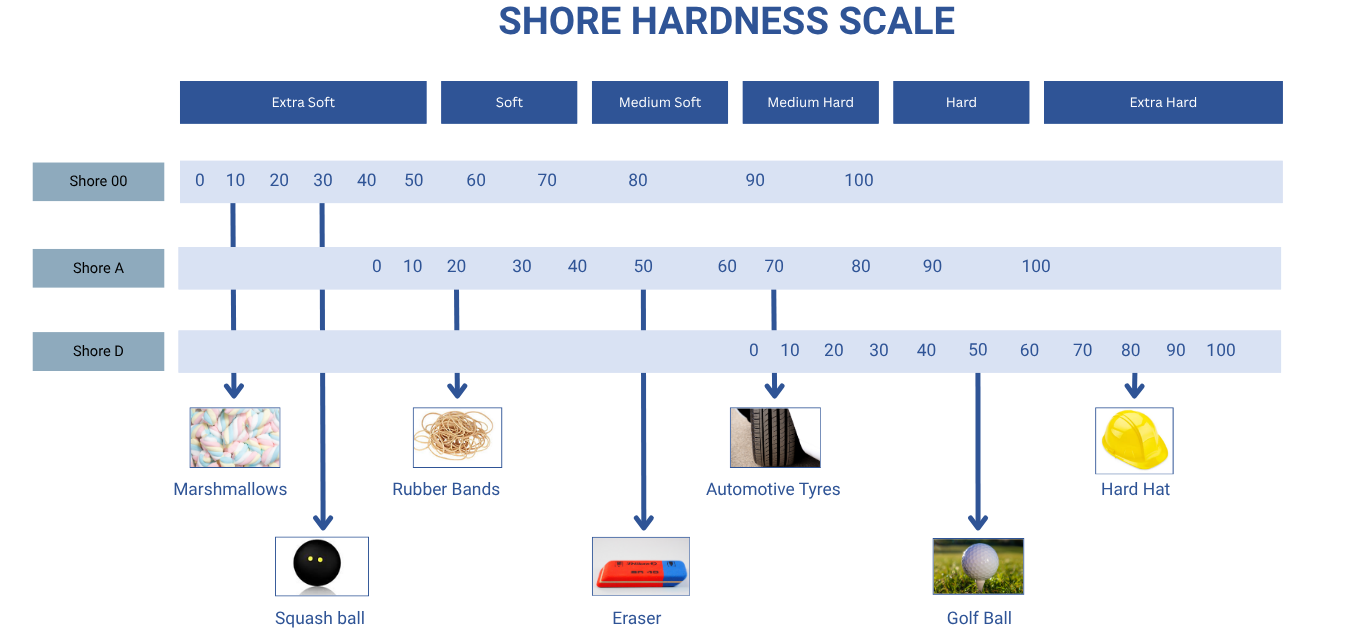
- Shore A (ShA or HA): Used for soft, flexible materials like rubber, silicone, and other elastomers. This is the standard scale for O-rings. The scale ranges from 0 (very soft) to 100 (very hard). For example, a 70 ShA O-ring offers a balance of flexibility and durability.
- Shore D (ShD or HD): Designed for harder plastics such as nylon, polycarbonate, and rigid thermoplastics. Shore D is not used for standard rubber O-rings, but may be referenced for rigid back-up rings (PTFE) or non-elastomeric sealing components.
- Shore 00: Less common in O-ring applications, Shore 00 is used for very soft gels or foams, like sponge rubber or soft silicone gels.
Which ShA Rating is Best for your Application
The ShA rating of an O-ring has a direct impact on its ability to seal, resist deformation, and withstand pressure. As a guide what rating should you use for different applications.
- Soft O-rings (40–60 ShA):
Highly flexible, excellent for low-pressure applications or when sealing against rough or
 uneven surfaces. However, they may wear more quickly and be prone to extrusion under high pressure.
 - Medium O-rings (70 ShA): The most commonly used hardness for O-rings, striking a balance between elasticity and strength. Suitable for both dynamic and static sealing in hydraulics and pneumatics.
- Hard O-rings (80–90 ShA): Best for high-pressure environments. These O-rings are more resistant to extrusion and abrasion but require smooth sealing surfaces and higher installation force.
Reduce Cost and Downtime by Getting your Selection Right
Understanding the Shore Hardness scale, especially Shore A (ShA) for elastomers, is essential for selecting the right O-ring. By matching the material hardness to your application's requirements, you can ensure a more reliable, longer-lasting seal that minimises downtime and maintenance. To find out more contact our team of experts.